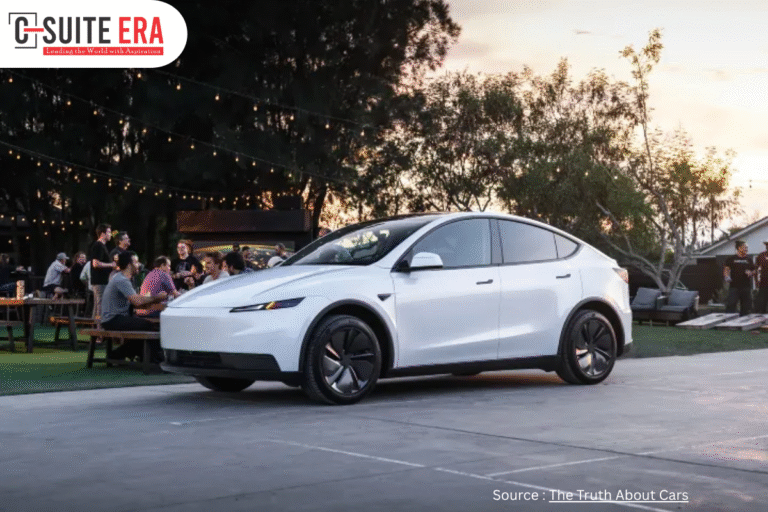
• Musk Expects Rapid Expansion of Self-Driving Cars Across the US This Year, Signaling Major Shift in Mobility IndustryElon Musk has stated that fully Tesla Autonomous Vehicles without human safety monitors are expected to become widely used across the United States later this year, marking one of his most ambitious timelines yet for autonomous vehicle deployment. The announcement was made during a technology and mobility summit in Tel Aviv, where he outlined Tesla’s progress in expanding its robotaxi-style operations beyond limited pilot regions.Also Read : -https://csuiteera.com/tesla-autonomous-vehicles/#Tesla #AutonomousVehicles #SelfDriving #FutureOfTransport #ElectricVehicles #Innovation #TechTrends #SmartCars #CSuiteEra #SustainableTransport #VehicleTechnology #AutonomousDriving #GreenTech
    Musk Expects Rapid Expansion of Self-Driving Cars Across the US This Year, Signaling Major Shift in Mobility IndustryElon Musk has stated that fully Tesla Autonomous Vehicles without human safety monitors are expected to become widely used across the United States later this year, marking one of his most ambitious timelines yet for autonomous vehicle deployment. The announcement was made during a technology and mobility summit in Tel Aviv, where he outlined Tesla’s progress in expanding its robotaxi-style operations beyond limited pilot regions.Also Read : -https://csuiteera.com/tesla-autonomous-vehicles/#Tesla #AutonomousVehicles #SelfDriving #FutureOfTransport #ElectricVehicles #Innovation #TechTrends #SmartCars #CSuiteEra #SustainableTransport #VehicleTechnology #AutonomousDriving #GreenTech
    CSUITEERA.COM
    Musk Expects Rapid Expansion of Self-Driving Cars Across the US This Year, Signaling Major Shift in Mobility Industry
    Elon Musk has stated that fully Tesla Autonomous Vehicles without human safety monitors are expected to become widely used across the United States later this year, marking one of his most ambitious timelines Read for more Information
    0 Комментарии 0 Поделились 0 Отзывы
  • Antenna Glass MarketMarket InsightsThe Antenna Glass Market is witnessing strong growth as the automotive and telecommunications industries increasingly integrate advanced connectivity solutions into vehicle glass systems. Antenna glass technology enables seamless transmission of signals such as GPS, radio, 5G, and vehicle-to-everything (V2X) communication directly through windshields and windows. This innovation eliminates the need for external antennas while enhancing vehicle design, aerodynamics, and overall performance. Rising demand for connected vehicles, electric mobility, and intelligent transportation systems is significantly driving market expansion.Get more info: https://www.trendvaultresearch.com/report/antenna-glass-999A key growth driver of the Antenna Glass Market is the rising adoption of smart automotive technologies. Modern vehicles are increasingly equipped with advanced infotainment systems, navigation tools, and safety features that rely on uninterrupted connectivity. By embedding antenna systems into glass, manufacturers can ensure stable signal reception while maintaining sleek vehicle aesthetics. This integration also helps reduce external components, improving durability and reducing maintenance requirements.The expansion of smart mobility and autonomous driving technologies is further boosting demand for antenna glass. As vehicles become more connected, reliable data transmission is essential for real-time navigation, emergency communication, and vehicle-to-infrastructure interactions. Antenna glass supports multiple frequency bands, making it suitable for next-generation communication networks and IoT-enabled automotive ecosystems.Technological advancements in materials science are also shaping market development. Innovations in transparent conductive coatings, nanotechnology, and embedded circuitry are improving signal efficiency without compromising visibility. The rollout of 5G networks and increasing adoption of electric and connected vehicles are expected to further accelerate market growth. However, high production costs and technical complexities remain challenges for manufacturers.Looking forward, the Antenna Glass Market is expected to grow steadily as automotive innovation, digital connectivity, and smart city infrastructure continue to evolve. Its role in enabling seamless communication across vehicles and networks positions it as a key technology in the future of transportation.Contact InformationTrendVault Research
    Email: sales@trendvaultresearch.com
    Website: www.trendvaultresearch.com#AntennaGlassMarket #AutomotiveTechnology #ConnectedVehicles #SmartMobility #5GConnectivity #VehicleTechnology #AutonomousDriving #IoT #AutomotiveInnovation #FutureOfMobility
    Antenna Glass MarketMarket InsightsThe Antenna Glass Market is witnessing strong growth as the automotive and telecommunications industries increasingly integrate advanced connectivity solutions into vehicle glass systems. Antenna glass technology enables seamless transmission of signals such as GPS, radio, 5G, and vehicle-to-everything (V2X) communication directly through windshields and windows. This innovation eliminates the need for external antennas while enhancing vehicle design, aerodynamics, and overall performance. Rising demand for connected vehicles, electric mobility, and intelligent transportation systems is significantly driving market expansion.Get more info: https://www.trendvaultresearch.com/report/antenna-glass-999A key growth driver of the Antenna Glass Market is the rising adoption of smart automotive technologies. Modern vehicles are increasingly equipped with advanced infotainment systems, navigation tools, and safety features that rely on uninterrupted connectivity. By embedding antenna systems into glass, manufacturers can ensure stable signal reception while maintaining sleek vehicle aesthetics. This integration also helps reduce external components, improving durability and reducing maintenance requirements.The expansion of smart mobility and autonomous driving technologies is further boosting demand for antenna glass. As vehicles become more connected, reliable data transmission is essential for real-time navigation, emergency communication, and vehicle-to-infrastructure interactions. Antenna glass supports multiple frequency bands, making it suitable for next-generation communication networks and IoT-enabled automotive ecosystems.Technological advancements in materials science are also shaping market development. Innovations in transparent conductive coatings, nanotechnology, and embedded circuitry are improving signal efficiency without compromising visibility. The rollout of 5G networks and increasing adoption of electric and connected vehicles are expected to further accelerate market growth. However, high production costs and technical complexities remain challenges for manufacturers.Looking forward, the Antenna Glass Market is expected to grow steadily as automotive innovation, digital connectivity, and smart city infrastructure continue to evolve. Its role in enabling seamless communication across vehicles and networks positions it as a key technology in the future of transportation.Contact InformationTrendVault Research Email: sales@trendvaultresearch.com Website: www.trendvaultresearch.com#AntennaGlassMarket #AutomotiveTechnology #ConnectedVehicles #SmartMobility #5GConnectivity #VehicleTechnology #AutonomousDriving #IoT #AutomotiveInnovation #FutureOfMobility
    WWW.TRENDVAULTRESEARCH.COM
    Industries We Cover
    Market Insights by Sector delivers clear trends, data-driven analysis, and practical outlooks to help investors and businesses make smarter, timely decisions.
    0 Комментарии 0 Поделились 0 Отзывы
  • Automotive Electronics Sensor MarketMarket InsightsThe automotive industry is rapidly transitioning toward intelligent, connected, and highly automated vehicles, where electronic sensors play a foundational role. From monitoring engine performance to enabling advanced safety features, sensors have become essential components in modern vehicle architecture. The Automotive Electronics Sensor Market is witnessing strong growth as automakers integrate smarter sensing technologies across all vehicle segments.Get more info: https://www.trendvaultresearch.com/report/automotive-electronics-sensor-994A major driver of this market is the increasing adoption of advanced driver assistance systems (ADAS). Features such as adaptive cruise control, lane departure warning, blind spot detection, and automatic emergency braking all rely heavily on a network of sensors. These devices continuously collect and transmit real-time data, enabling vehicles to respond intelligently to changing road conditions and enhancing overall safety.Another key factor fueling market growth is the rise of electric and hybrid vehicles. These vehicles depend on a wide range of sensors to monitor battery health, temperature, voltage, and energy consumption. As electrification continues to expand globally, the demand for high-precision and reliable sensors is expected to increase significantly.Technological advancements are also reshaping the Automotive Electronics Sensor Market. Innovations in MEMS (Micro-Electro-Mechanical Systems), radar, LiDAR, and infrared sensing technologies are improving accuracy, miniaturization, and energy efficiency. These advancements are enabling more sophisticated applications, including autonomous driving and real-time vehicle diagnostics.The growing trend of connected vehicles is further accelerating demand. Modern cars are increasingly integrated with IoT-based systems that rely on sensors to communicate with external infrastructure, other vehicles, and cloud platforms. This connectivity enhances navigation, predictive maintenance, and overall driving experience.Regionally, Asia-Pacific dominates the market due to high vehicle production and rapid adoption of automotive technologies. North America and Europe also hold significant shares, driven by strong regulatory frameworks, technological innovation, and early adoption of autonomous vehicle systems.Despite strong growth prospects, challenges such as high development costs and system complexity remain. However, ongoing research and continuous innovation are expected to address these issues and support market expansion.Overall, the Automotive Electronics Sensor Market is poised for substantial growth, driven by vehicle electrification, automation trends, and the increasing demand for safer and smarter mobility solutions.Contact Information:
    TrendVault Research
    Email: sales@trendvaultresearch.com
    Website: www.trendvaultresearch.com#AutomotiveSensors #VehicleTechnology #ADAS #MarketInsights #SmartVehicles #AutomotiveElectronics #EVTechnology #AutonomousDriving
    Automotive Electronics Sensor MarketMarket InsightsThe automotive industry is rapidly transitioning toward intelligent, connected, and highly automated vehicles, where electronic sensors play a foundational role. From monitoring engine performance to enabling advanced safety features, sensors have become essential components in modern vehicle architecture. The Automotive Electronics Sensor Market is witnessing strong growth as automakers integrate smarter sensing technologies across all vehicle segments.Get more info: https://www.trendvaultresearch.com/report/automotive-electronics-sensor-994A major driver of this market is the increasing adoption of advanced driver assistance systems (ADAS). Features such as adaptive cruise control, lane departure warning, blind spot detection, and automatic emergency braking all rely heavily on a network of sensors. These devices continuously collect and transmit real-time data, enabling vehicles to respond intelligently to changing road conditions and enhancing overall safety.Another key factor fueling market growth is the rise of electric and hybrid vehicles. These vehicles depend on a wide range of sensors to monitor battery health, temperature, voltage, and energy consumption. As electrification continues to expand globally, the demand for high-precision and reliable sensors is expected to increase significantly.Technological advancements are also reshaping the Automotive Electronics Sensor Market. Innovations in MEMS (Micro-Electro-Mechanical Systems), radar, LiDAR, and infrared sensing technologies are improving accuracy, miniaturization, and energy efficiency. These advancements are enabling more sophisticated applications, including autonomous driving and real-time vehicle diagnostics.The growing trend of connected vehicles is further accelerating demand. Modern cars are increasingly integrated with IoT-based systems that rely on sensors to communicate with external infrastructure, other vehicles, and cloud platforms. This connectivity enhances navigation, predictive maintenance, and overall driving experience.Regionally, Asia-Pacific dominates the market due to high vehicle production and rapid adoption of automotive technologies. North America and Europe also hold significant shares, driven by strong regulatory frameworks, technological innovation, and early adoption of autonomous vehicle systems.Despite strong growth prospects, challenges such as high development costs and system complexity remain. However, ongoing research and continuous innovation are expected to address these issues and support market expansion.Overall, the Automotive Electronics Sensor Market is poised for substantial growth, driven by vehicle electrification, automation trends, and the increasing demand for safer and smarter mobility solutions.Contact Information: TrendVault Research Email: sales@trendvaultresearch.com Website: www.trendvaultresearch.com#AutomotiveSensors #VehicleTechnology #ADAS #MarketInsights #SmartVehicles #AutomotiveElectronics #EVTechnology #AutonomousDriving
    WWW.TRENDVAULTRESEARCH.COM
    Industries We Cover
    Market Insights by Sector delivers clear trends, data-driven analysis, and practical outlooks to help investors and businesses make smarter, timely decisions.
    0 Комментарии 0 Поделились 0 Отзывы
  • Commercial Vehicle ACC Digital Signal Processor Market

    Market Insights

    The Commercial Vehicle ACC Digital Signal Processor Market is gaining strong momentum as the transportation industry shifts toward smarter and safer mobility solutions. Digital signal processors (DSPs) are at the heart of Adaptive Cruise Control (ACC) systems, enabling real-time data processing from sensors like radar and cameras. These technologies help commercial vehicles maintain optimal speed, ensure safe following distances, and reduce driver fatigue, making them increasingly essential in modern fleets.

    Get more info: https://www.trendvaultresearch.com/report/commercial-vehicle-acc-digital-signal-processor-846

    One of the key drivers of this market is the growing demand for advanced driver assistance systems (ADAS) in commercial vehicles. Fleet operators are prioritizing safety, fuel efficiency, and operational optimization, all of which are supported by ACC systems powered by high-performance DSPs. Additionally, government regulations mandating safety features in heavy-duty vehicles are encouraging manufacturers to integrate these technologies more rapidly.

    Technological advancements are also playing a crucial role in shaping the market. The evolution of sensor fusion—where multiple data streams are processed simultaneously—has significantly improved the accuracy and responsiveness of ACC systems. DSPs are becoming more powerful and energy-efficient, enabling seamless performance even in complex driving environments. This is particularly beneficial for long-haul trucks and logistics vehicles that operate under varying road and weather conditions.

    Regionally, Asia-Pacific is emerging as a major growth hub due to increasing commercial vehicle production and expanding infrastructure development. Meanwhile, North America and Europe continue to lead in technological adoption, driven by stringent safety standards and strong innovation ecosystems.

    Despite its promising growth, the market faces challenges such as high implementation costs and semiconductor supply constraints. However, as technology becomes more affordable and awareness increases, adoption is expected to rise steadily.

    In the coming years, the Commercial Vehicle ACC Digital Signal Processor Market is set to play a vital role in transforming commercial transportation, paving the way for safer, smarter, and more efficient mobility solutions.

    Contact Information:
    TrendVault Research
    Email: sales@trendvaultresearch.com

    Website: www.trendvaultresearch.com

    #CommercialVehicle #ACCTechnology #DigitalSignalProcessor #ADAS #SmartMobility #AutomotiveInnovation #FleetManagement #AutonomousDriving #MarketInsights
    Commercial Vehicle ACC Digital Signal Processor Market Market Insights The Commercial Vehicle ACC Digital Signal Processor Market is gaining strong momentum as the transportation industry shifts toward smarter and safer mobility solutions. Digital signal processors (DSPs) are at the heart of Adaptive Cruise Control (ACC) systems, enabling real-time data processing from sensors like radar and cameras. These technologies help commercial vehicles maintain optimal speed, ensure safe following distances, and reduce driver fatigue, making them increasingly essential in modern fleets. Get more info: https://www.trendvaultresearch.com/report/commercial-vehicle-acc-digital-signal-processor-846 One of the key drivers of this market is the growing demand for advanced driver assistance systems (ADAS) in commercial vehicles. Fleet operators are prioritizing safety, fuel efficiency, and operational optimization, all of which are supported by ACC systems powered by high-performance DSPs. Additionally, government regulations mandating safety features in heavy-duty vehicles are encouraging manufacturers to integrate these technologies more rapidly. Technological advancements are also playing a crucial role in shaping the market. The evolution of sensor fusion—where multiple data streams are processed simultaneously—has significantly improved the accuracy and responsiveness of ACC systems. DSPs are becoming more powerful and energy-efficient, enabling seamless performance even in complex driving environments. This is particularly beneficial for long-haul trucks and logistics vehicles that operate under varying road and weather conditions. Regionally, Asia-Pacific is emerging as a major growth hub due to increasing commercial vehicle production and expanding infrastructure development. Meanwhile, North America and Europe continue to lead in technological adoption, driven by stringent safety standards and strong innovation ecosystems. Despite its promising growth, the market faces challenges such as high implementation costs and semiconductor supply constraints. However, as technology becomes more affordable and awareness increases, adoption is expected to rise steadily. In the coming years, the Commercial Vehicle ACC Digital Signal Processor Market is set to play a vital role in transforming commercial transportation, paving the way for safer, smarter, and more efficient mobility solutions. Contact Information: TrendVault Research Email: sales@trendvaultresearch.com Website: www.trendvaultresearch.com #CommercialVehicle #ACCTechnology #DigitalSignalProcessor #ADAS #SmartMobility #AutomotiveInnovation #FleetManagement #AutonomousDriving #MarketInsights
    WWW.TRENDVAULTRESEARCH.COM
    Commercial Vehicle ACC Digital Signal Processor - 2025-2033 Trends: Unveiling Growth Opportunities and Competitor Dynamics | Market Research Report
    Discover the booming Commercial Vehicle ACC Digital Signal Processor market! This in-depth analysis reveals market size, growth projections (CAGR), key players (Bosch, Denso, Continental), regional trends, and future forecasts (2025-2033). Learn about driving factors, restraints, and segmentation impacting this crucial ADAS technology.
    0 Комментарии 0 Поделились 0 Отзывы
  • SUV ACC ECU Market

    Market Insights

    The global SUV ACC ECU Market is witnessing rapid expansion as automotive manufacturers increasingly integrate advanced driver-assistance systems (ADAS) into modern SUVs. The ACC ECU (Adaptive Cruise Control Electronic Control Unit) is a critical component that manages vehicle speed, distance control, and real-time driving adjustments, ensuring safer and more comfortable driving experiences.

    One of the primary growth drivers of the market is the rising consumer demand for enhanced safety, convenience, and semi-autonomous driving features. As SUVs continue to dominate global vehicle sales, automakers are equipping them with intelligent cruise control systems that rely heavily on high-performance ECUs. In addition, stricter road safety regulations across regions such as North America, Europe, and Asia-Pacific are pushing OEMs to adopt ACC systems as standard or optional features in new SUV models.

    Technological advancements are also playing a key role in shaping the SUV ACC ECU Market. Innovations in radar sensors, camera fusion systems, and AI-powered algorithms are enabling more accurate distance detection and smoother vehicle response. Furthermore, the transition toward Level 2+ and Level 3 autonomous driving is increasing the complexity and importance of ECU systems in SUVs.

    Another significant trend is the integration of ACC ECUs into centralized domain controllers, allowing multiple ADAS functions—such as lane-keeping assist and emergency braking—to work seamlessly together. This integration not only improves system efficiency but also reduces overall vehicle wiring complexity and cost.

    Regionally, Asia-Pacific is emerging as the fastest-growing market due to booming SUV sales, expanding automotive manufacturing, and increasing adoption of smart mobility solutions in countries like China and India. North America and Europe continue to maintain strong market shares, supported by advanced automotive ecosystems and high consumer preference for safety technologies.

    Overall, the SUV ACC ECU Market is set for sustained growth as the automotive industry moves toward smarter, safer, and more automated driving systems.

    get more info: https://www.trendvaultresearch.com/report/suv-acc-ecu-845

    For more information, contact:
    TrendVault Research
    Email: sales@trendvaultresearch.com

    Website: www.trendvaultresearch.com

    #SUVA CCECU #ACC ECU #AutomotiveElectronics #ADAS #SmartSUV #CruiseControlSystems #AutomotiveMarket #VehicleSafety #AutonomousDriving #MarketInsights #TrendVaultResearch
    SUV ACC ECU Market Market Insights The global SUV ACC ECU Market is witnessing rapid expansion as automotive manufacturers increasingly integrate advanced driver-assistance systems (ADAS) into modern SUVs. The ACC ECU (Adaptive Cruise Control Electronic Control Unit) is a critical component that manages vehicle speed, distance control, and real-time driving adjustments, ensuring safer and more comfortable driving experiences. One of the primary growth drivers of the market is the rising consumer demand for enhanced safety, convenience, and semi-autonomous driving features. As SUVs continue to dominate global vehicle sales, automakers are equipping them with intelligent cruise control systems that rely heavily on high-performance ECUs. In addition, stricter road safety regulations across regions such as North America, Europe, and Asia-Pacific are pushing OEMs to adopt ACC systems as standard or optional features in new SUV models. Technological advancements are also playing a key role in shaping the SUV ACC ECU Market. Innovations in radar sensors, camera fusion systems, and AI-powered algorithms are enabling more accurate distance detection and smoother vehicle response. Furthermore, the transition toward Level 2+ and Level 3 autonomous driving is increasing the complexity and importance of ECU systems in SUVs. Another significant trend is the integration of ACC ECUs into centralized domain controllers, allowing multiple ADAS functions—such as lane-keeping assist and emergency braking—to work seamlessly together. This integration not only improves system efficiency but also reduces overall vehicle wiring complexity and cost. Regionally, Asia-Pacific is emerging as the fastest-growing market due to booming SUV sales, expanding automotive manufacturing, and increasing adoption of smart mobility solutions in countries like China and India. North America and Europe continue to maintain strong market shares, supported by advanced automotive ecosystems and high consumer preference for safety technologies. Overall, the SUV ACC ECU Market is set for sustained growth as the automotive industry moves toward smarter, safer, and more automated driving systems. get more info: https://www.trendvaultresearch.com/report/suv-acc-ecu-845 For more information, contact: TrendVault Research Email: sales@trendvaultresearch.com Website: www.trendvaultresearch.com #SUVA CCECU #ACC ECU #AutomotiveElectronics #ADAS #SmartSUV #CruiseControlSystems #AutomotiveMarket #VehicleSafety #AutonomousDriving #MarketInsights #TrendVaultResearch
    WWW.TRENDVAULTRESEARCH.COM
    SUV ACC ECU Market Dynamics: Drivers and Barriers to Growth 2025-2033 | Market Research Report
    The booming SUV ACC ECU market is projected to reach $8 billion by 2033, driven by rising ADAS adoption and safety regulations. Explore market trends, key players (Bosch, Denso, Continental), and regional growth forecasts in this comprehensive analysis.
    0 Комментарии 0 Поделились 0 Отзывы
  • Automotive Steering Torque & Angle Sensor Market

    market insights

    The Automotive Steering Torque & Angle Sensor Market is a key segment of the global automotive electronics industry, supporting advanced steering control, vehicle stability, and driver assistance systems. These sensors measure steering wheel torque and angular position in real time, enabling precise communication between the driver’s input and the vehicle’s electronic control systems. They are essential components in electric power steering (EPS), advanced driver assistance systems (ADAS), and autonomous driving technologies.

    Get more info: https://www.trendvaultresearch.com/report/automotive-steering-torque-angle-sensor-809

    The market is experiencing strong growth driven by increasing vehicle electrification, rising safety regulations, and the rapid adoption of intelligent steering systems. As modern vehicles integrate more automation features, accurate steering feedback becomes critical for maintaining control, stability, and safety under all driving conditions. This is significantly boosting demand for combined torque and angle sensor systems across passenger cars, commercial vehicles, and electric vehicles.

    A major growth driver is the widespread adoption of EPS systems, which rely heavily on torque and angle sensors for smooth and efficient steering assistance. Additionally, the expansion of ADAS technologies such as lane-keeping assist, adaptive cruise control, and automated parking systems is further increasing sensor integration in vehicles. These systems depend on real-time steering data to ensure accurate vehicle positioning and safe maneuvering.

    Another important factor is the growing shift toward electric and autonomous vehicles. EV platforms require highly precise steering control systems due to their unique weight distribution and performance characteristics. Similarly, autonomous driving systems depend on redundant and highly accurate sensor data to execute safe steering decisions in complex traffic environments.

    Technological advancements are also shaping the market. Manufacturers are increasingly developing contactless sensors, magnetic sensing technologies, and integrated sensor modules that improve accuracy, reduce wear, and enhance durability. However, challenges such as high development costs and system integration complexity remain key concerns for manufacturers.

    Looking ahead, the Automotive Steering Torque & Angle Sensor Market is expected to grow steadily as the automotive industry continues its transition toward electrification, automation, and connected mobility. Increasing safety standards and the evolution of smart steering technologies will further strengthen the importance of these sensors in next-generation vehicles.

    Contact Information:
    TrendVault Research
    Email: sales@trendvaultresearch.com

    Website: www.trendvaultresearch.com

    #SteeringSensors #AutomotiveMarket #TorqueSensor #AngleSensor #ADAS #EVTechnology #AutomotiveElectronics #SmartVehicles #AutonomousDriving #FutureMobility

    Automotive Steering Torque & Angle Sensor Market market insights The Automotive Steering Torque & Angle Sensor Market is a key segment of the global automotive electronics industry, supporting advanced steering control, vehicle stability, and driver assistance systems. These sensors measure steering wheel torque and angular position in real time, enabling precise communication between the driver’s input and the vehicle’s electronic control systems. They are essential components in electric power steering (EPS), advanced driver assistance systems (ADAS), and autonomous driving technologies. Get more info: https://www.trendvaultresearch.com/report/automotive-steering-torque-angle-sensor-809 The market is experiencing strong growth driven by increasing vehicle electrification, rising safety regulations, and the rapid adoption of intelligent steering systems. As modern vehicles integrate more automation features, accurate steering feedback becomes critical for maintaining control, stability, and safety under all driving conditions. This is significantly boosting demand for combined torque and angle sensor systems across passenger cars, commercial vehicles, and electric vehicles. A major growth driver is the widespread adoption of EPS systems, which rely heavily on torque and angle sensors for smooth and efficient steering assistance. Additionally, the expansion of ADAS technologies such as lane-keeping assist, adaptive cruise control, and automated parking systems is further increasing sensor integration in vehicles. These systems depend on real-time steering data to ensure accurate vehicle positioning and safe maneuvering. Another important factor is the growing shift toward electric and autonomous vehicles. EV platforms require highly precise steering control systems due to their unique weight distribution and performance characteristics. Similarly, autonomous driving systems depend on redundant and highly accurate sensor data to execute safe steering decisions in complex traffic environments. Technological advancements are also shaping the market. Manufacturers are increasingly developing contactless sensors, magnetic sensing technologies, and integrated sensor modules that improve accuracy, reduce wear, and enhance durability. However, challenges such as high development costs and system integration complexity remain key concerns for manufacturers. Looking ahead, the Automotive Steering Torque & Angle Sensor Market is expected to grow steadily as the automotive industry continues its transition toward electrification, automation, and connected mobility. Increasing safety standards and the evolution of smart steering technologies will further strengthen the importance of these sensors in next-generation vehicles. Contact Information: TrendVault Research Email: sales@trendvaultresearch.com Website: www.trendvaultresearch.com #SteeringSensors #AutomotiveMarket #TorqueSensor #AngleSensor #ADAS #EVTechnology #AutomotiveElectronics #SmartVehicles #AutonomousDriving #FutureMobility

    WWW.TRENDVAULTRESEARCH.COM
    Automotive Steering Torque & Angle Sensor Market Dynamics: Drivers and Barriers to Growth 2025-2033 | Market Research Report
    The automotive steering torque & angle sensor market is booming, driven by ADAS and autonomous vehicle advancements. Learn about market size, growth projections (CAGR 8%), key players (Bosch, Denso, Honeywell), and future trends in this comprehensive analysis.
    0 Комментарии 0 Поделились 0 Отзывы
  • Automatic Emergency Steering Market

    market insights

    The Automatic Emergency Steering Market is an advanced segment of the automotive safety and ADAS (Advanced Driver Assistance Systems) industry, focused on preventing collisions by automatically controlling vehicle steering during critical driving situations. These systems use a combination of cameras, radar, LiDAR, and electronic control units to detect obstacles and instantly adjust steering direction when a crash risk is identified. Unlike traditional safety systems that rely mainly on braking, automatic emergency steering adds a proactive layer of lateral vehicle control for improved accident avoidance.

    Get more info: https://www.trendvaultresearch.com/report/automatic-emergency-steering-system-797

    The market is witnessing strong growth driven by rising demand for intelligent vehicle safety systems, increasing road accident prevention initiatives, and the rapid expansion of semi-autonomous and autonomous driving technologies. Automakers are integrating automatic emergency steering features into next-generation vehicles to enhance driver safety and meet stringent global safety regulations. Growing consumer awareness about advanced safety technologies is also accelerating adoption across passenger vehicles.

    A major growth driver is the increasing penetration of ADAS-equipped vehicles. Features such as lane-keeping assist, forward collision warning, and automatic emergency braking are now evolving into more advanced systems that include autonomous steering intervention. This shift is particularly strong in electric and premium vehicles, where manufacturers prioritize innovation and safety differentiation.

    Technological advancements are further shaping the market. Improvements in sensor fusion, artificial intelligence, and real-time decision-making algorithms are enabling faster and more accurate steering responses. These developments help vehicles execute safe evasive maneuvers even in complex urban traffic environments.

    However, the market faces challenges such as high system cost, complex integration with existing vehicle architectures, and concerns regarding system reliability under unpredictable road conditions. Despite these challenges, ongoing R&D investments by leading automotive suppliers are expected to improve system accuracy and reduce costs over time.

    Looking ahead, the Automatic Emergency Steering Market is expected to grow significantly as global automotive safety standards tighten and autonomous driving technologies mature. Increasing collaboration between OEMs and technology providers will further accelerate innovation, making intelligent steering intervention a core component of future mobility systems.

    Contact Information:
    TrendVault Research
    Email: sales@trendvaultresearch.com

    Website: www.trendvaultresearch.com

    #AutomaticEmergencySteering #ADAS #AutomotiveSafety #SmartVehicles #AutonomousDriving #VehicleTechnology #CarSafetySystems #FutureMobility #AutomotiveMarket #IntelligentTransport
    Automatic Emergency Steering Market market insights The Automatic Emergency Steering Market is an advanced segment of the automotive safety and ADAS (Advanced Driver Assistance Systems) industry, focused on preventing collisions by automatically controlling vehicle steering during critical driving situations. These systems use a combination of cameras, radar, LiDAR, and electronic control units to detect obstacles and instantly adjust steering direction when a crash risk is identified. Unlike traditional safety systems that rely mainly on braking, automatic emergency steering adds a proactive layer of lateral vehicle control for improved accident avoidance. Get more info: https://www.trendvaultresearch.com/report/automatic-emergency-steering-system-797 The market is witnessing strong growth driven by rising demand for intelligent vehicle safety systems, increasing road accident prevention initiatives, and the rapid expansion of semi-autonomous and autonomous driving technologies. Automakers are integrating automatic emergency steering features into next-generation vehicles to enhance driver safety and meet stringent global safety regulations. Growing consumer awareness about advanced safety technologies is also accelerating adoption across passenger vehicles. A major growth driver is the increasing penetration of ADAS-equipped vehicles. Features such as lane-keeping assist, forward collision warning, and automatic emergency braking are now evolving into more advanced systems that include autonomous steering intervention. This shift is particularly strong in electric and premium vehicles, where manufacturers prioritize innovation and safety differentiation. Technological advancements are further shaping the market. Improvements in sensor fusion, artificial intelligence, and real-time decision-making algorithms are enabling faster and more accurate steering responses. These developments help vehicles execute safe evasive maneuvers even in complex urban traffic environments. However, the market faces challenges such as high system cost, complex integration with existing vehicle architectures, and concerns regarding system reliability under unpredictable road conditions. Despite these challenges, ongoing R&D investments by leading automotive suppliers are expected to improve system accuracy and reduce costs over time. Looking ahead, the Automatic Emergency Steering Market is expected to grow significantly as global automotive safety standards tighten and autonomous driving technologies mature. Increasing collaboration between OEMs and technology providers will further accelerate innovation, making intelligent steering intervention a core component of future mobility systems. Contact Information: TrendVault Research Email: sales@trendvaultresearch.com Website: www.trendvaultresearch.com #AutomaticEmergencySteering #ADAS #AutomotiveSafety #SmartVehicles #AutonomousDriving #VehicleTechnology #CarSafetySystems #FutureMobility #AutomotiveMarket #IntelligentTransport
    WWW.TRENDVAULTRESEARCH.COM
    Automatic Emergency Steering System - Unlocking Growth Potential: Analysis and Forecasts 2025-2033 | Market Research Report
    Discover the booming Automatic Emergency Steering (AES) system market forecast to 2033. This analysis reveals key drivers, trends, restraints, and market share projections, highlighting leading players like Bosch, ZF, and Autoliv. Learn about the impact of ADAS, safety regulations, and technological advancements on this rapidly expanding sector.
    0 Комментарии 0 Поделились 0 Отзывы
  • Redundant Electronic Steering System (RES) Market

    Market Insights

    The Redundant Electronic Steering System (RES) Market is accelerating as the automotive industry embraces advanced safety technologies and digital vehicle architectures. RES technology, designed to provide backup steering control in the event of primary system failure, is emerging as a crucial component in next‑generation vehicles, particularly with the rise of autonomous driving and electric platforms.

    Get more info: https://www.trendvaultresearch.com/report/redundant-electronic-steering-system-res-732

    At its core, the Redundant Electronic Steering System (RES) Market is driven by the need for improved reliability and safety. Traditional hydraulic steering systems, while effective, lack the sophisticated fault tolerance required by modern vehicle applications. RES technology enhances steering reliability by integrating secondary control modules, backup power sources, and fail‑safe algorithms. This ensures continuous steering control even if the main system experiences an unexpected malfunction — a feature that’s increasingly valued in premium vehicles and advanced driver‑assistance system (ADAS) configurations.

    The evolution of vehicle electrification is another major catalyst shaping the RES market. As electric vehicles (EVs) and hybrid models replace conventional internal combustion engine cars, the architecture of steering systems has transformed. Electronic steering systems are now standard, and redundancy adds a layer of security that vehicle manufacturers are keen to adopt to meet consumer expectations and regulatory safety requirements. This trend is also reinforced by the growing shift toward level‑2 and higher autonomous driving technologies, where steering reliability becomes essential for safe operations.

    Innovation and system integration are key trends within the market. Manufacturers are incorporating smart diagnostics, adaptive control units, and lightweight components to optimize performance, reduce energy consumption, and improve responsiveness. These enhancements not only support better handling and maneuverability but also provide data insights that can be used for predictive maintenance and performance monitoring.

    Regionally, the Redundant Electronic Steering System (RES) Market is expanding across major automotive manufacturing hubs as global demand for safer, smarter vehicles rises. Increased production of connected and autonomous vehicles in North America, Europe, and Asia‑Pacific is boosting the need for advanced steering technologies. Emerging markets are also exploring opportunities to integrate RES systems as part of broader safety and electrification initiatives.

    In conclusion, the Redundant Electronic Steering System (RES) Market is set for substantial growth as vehicle manufacturers prioritize advanced safety features and electronic integration. With technological evolution and regulatory focus on automotive safety, RES technology is poised to become a critical enabler of next‑generation mobility.

    Contact Information:
    TrendVault Research
    Email: sales@trendvaultresearch.com

    Website: www.trendvaultresearch.com

    #RedundantElectronicSteeringSystem #RESMarket #AutomotiveSafety #AdvancedSteering #VehicleTechnology #ADAS #ElectricVehicles #AutonomousDriving #MarketInsights
    Redundant Electronic Steering System (RES) Market Market Insights The Redundant Electronic Steering System (RES) Market is accelerating as the automotive industry embraces advanced safety technologies and digital vehicle architectures. RES technology, designed to provide backup steering control in the event of primary system failure, is emerging as a crucial component in next‑generation vehicles, particularly with the rise of autonomous driving and electric platforms. Get more info: https://www.trendvaultresearch.com/report/redundant-electronic-steering-system-res-732 At its core, the Redundant Electronic Steering System (RES) Market is driven by the need for improved reliability and safety. Traditional hydraulic steering systems, while effective, lack the sophisticated fault tolerance required by modern vehicle applications. RES technology enhances steering reliability by integrating secondary control modules, backup power sources, and fail‑safe algorithms. This ensures continuous steering control even if the main system experiences an unexpected malfunction — a feature that’s increasingly valued in premium vehicles and advanced driver‑assistance system (ADAS) configurations. The evolution of vehicle electrification is another major catalyst shaping the RES market. As electric vehicles (EVs) and hybrid models replace conventional internal combustion engine cars, the architecture of steering systems has transformed. Electronic steering systems are now standard, and redundancy adds a layer of security that vehicle manufacturers are keen to adopt to meet consumer expectations and regulatory safety requirements. This trend is also reinforced by the growing shift toward level‑2 and higher autonomous driving technologies, where steering reliability becomes essential for safe operations. Innovation and system integration are key trends within the market. Manufacturers are incorporating smart diagnostics, adaptive control units, and lightweight components to optimize performance, reduce energy consumption, and improve responsiveness. These enhancements not only support better handling and maneuverability but also provide data insights that can be used for predictive maintenance and performance monitoring. Regionally, the Redundant Electronic Steering System (RES) Market is expanding across major automotive manufacturing hubs as global demand for safer, smarter vehicles rises. Increased production of connected and autonomous vehicles in North America, Europe, and Asia‑Pacific is boosting the need for advanced steering technologies. Emerging markets are also exploring opportunities to integrate RES systems as part of broader safety and electrification initiatives. In conclusion, the Redundant Electronic Steering System (RES) Market is set for substantial growth as vehicle manufacturers prioritize advanced safety features and electronic integration. With technological evolution and regulatory focus on automotive safety, RES technology is poised to become a critical enabler of next‑generation mobility. Contact Information: TrendVault Research Email: sales@trendvaultresearch.com Website: www.trendvaultresearch.com #RedundantElectronicSteeringSystem #RESMarket #AutomotiveSafety #AdvancedSteering #VehicleTechnology #ADAS #ElectricVehicles #AutonomousDriving #MarketInsights
    WWW.TRENDVAULTRESEARCH.COM
    Redundant Electronic Steering System (RES) - Unlocking Growth Potential: Analysis and Forecasts 2025-2033 | Market Research Report
    The Redundant Electronic Steering System (RES) market is booming, projected to reach $7.77 billion by 2033 with a 15% CAGR. Driven by ADAS, autonomous driving, and safety regulations, key players like Bosch and ZF are leading this crucial automotive technology sector. Learn more about market trends, key players, and future growth projections.
    0 Комментарии 0 Поделились 0 Отзывы
  • Automotive 60GHz Radar Market

    Market Insights

    The automotive 60GHz radar market is gaining significant momentum as the global automotive sector embraces advanced safety and automation technologies. Operating at millimeter-wave frequencies, 60GHz radar systems provide highly accurate detection of objects, distance, and motion, even in low-visibility conditions such as fog, rain, or darkness. This makes them a crucial component in enhancing vehicle intelligence and road safety.

    Get more info: https://www.trendvaultresearch.com/report/automotive-60ghz-radar-662

    One of the primary factors driving market growth is the widespread integration of advanced driver-assistance systems (ADAS). Features like adaptive cruise control, blind-spot monitoring, lane-change assistance, and automated parking depend heavily on radar sensors for real-time environmental awareness. As consumer demand for safer and smarter vehicles rises, automakers are increasingly incorporating 60GHz radar into both premium and mid-range vehicle segments.

    In addition to safety applications, technological advancements are pushing the boundaries of radar capabilities. The development of compact and energy-efficient radar modules, combined with AI-driven signal processing, is improving detection accuracy and response time. Furthermore, the integration of radar with other sensor technologies such as cameras and LiDAR is enabling more comprehensive and reliable perception systems, essential for the advancement of autonomous driving.

    Regionally, Asia-Pacific continues to lead the market due to its strong automotive manufacturing base and growing adoption of intelligent vehicle technologies. Meanwhile, North America and Europe remain key innovation hubs, driven by stringent safety regulations and continuous investments in next-generation mobility solutions.

    Despite challenges such as high implementation costs and system integration complexities, the market outlook remains highly positive. As production scales up and technology becomes more accessible, 60GHz radar systems are expected to become a standard feature in modern vehicles.

    The automotive 60GHz radar market is set to play a transformative role in the evolution of connected, autonomous, and safe transportation systems worldwide.

    Contact Information:
    TrendVault Research
    Email: sales@trendvaultresearch.com

    Website: www.trendvaultresearch.com

    #AutomotiveRadar #60GHzRadar #ADAS #AutonomousDriving #VehicleSafety #SmartCars #MobilityInnovation #MarketInsights #FutureMobility #TechTrends
    Automotive 60GHz Radar Market Market Insights The automotive 60GHz radar market is gaining significant momentum as the global automotive sector embraces advanced safety and automation technologies. Operating at millimeter-wave frequencies, 60GHz radar systems provide highly accurate detection of objects, distance, and motion, even in low-visibility conditions such as fog, rain, or darkness. This makes them a crucial component in enhancing vehicle intelligence and road safety. Get more info: https://www.trendvaultresearch.com/report/automotive-60ghz-radar-662 One of the primary factors driving market growth is the widespread integration of advanced driver-assistance systems (ADAS). Features like adaptive cruise control, blind-spot monitoring, lane-change assistance, and automated parking depend heavily on radar sensors for real-time environmental awareness. As consumer demand for safer and smarter vehicles rises, automakers are increasingly incorporating 60GHz radar into both premium and mid-range vehicle segments. In addition to safety applications, technological advancements are pushing the boundaries of radar capabilities. The development of compact and energy-efficient radar modules, combined with AI-driven signal processing, is improving detection accuracy and response time. Furthermore, the integration of radar with other sensor technologies such as cameras and LiDAR is enabling more comprehensive and reliable perception systems, essential for the advancement of autonomous driving. Regionally, Asia-Pacific continues to lead the market due to its strong automotive manufacturing base and growing adoption of intelligent vehicle technologies. Meanwhile, North America and Europe remain key innovation hubs, driven by stringent safety regulations and continuous investments in next-generation mobility solutions. Despite challenges such as high implementation costs and system integration complexities, the market outlook remains highly positive. As production scales up and technology becomes more accessible, 60GHz radar systems are expected to become a standard feature in modern vehicles. The automotive 60GHz radar market is set to play a transformative role in the evolution of connected, autonomous, and safe transportation systems worldwide. Contact Information: TrendVault Research Email: sales@trendvaultresearch.com Website: www.trendvaultresearch.com #AutomotiveRadar #60GHzRadar #ADAS #AutonomousDriving #VehicleSafety #SmartCars #MobilityInnovation #MarketInsights #FutureMobility #TechTrends
    WWW.TRENDVAULTRESEARCH.COM
    Automotive 60GHz Radar - 2025-2033 Trends: Unveiling Growth Opportunities and Competitor Dynamics | Market Research Report
    The automotive 60GHz radar market is booming, with a projected CAGR of 34.1% through 2033. Driven by ADAS and autonomous driving, key players like Infineon and Texas Instruments are shaping this rapidly expanding sector. Discover market trends, forecasts, and key players in this in-depth analysis.
    0 Комментарии 0 Поделились 0 Отзывы
Реклама
VintFint https://vintfint.com